The History of the Galileo SAR Meet
From the SAR Meet of the 1990s to today’s international Galileo-supported event.
A tradition of international cooperation
Search and Rescue is international by nature. Emergencies do not stop at national borders, and effective SAR operations depend on cooperation, communication and shared experience.
The origins of the SAR Meet date back to the 1990s. What began as a friendly competition between SAR crews from neighbouring countries developed over the years into an international meeting point for Search and Rescue professionals. The idea was simple: bring people together, exchange experience, compare procedures and learn from each other.
Alongside the operational challenges, the SAR Meet has always provided an opportunity to strengthen personal relationships and professional cooperation between organisations and nations. Today, the event brings together SAR professionals, specialists, organisations and representatives from Europe and beyond. Some participants take part in the operational challenges, while others contribute their knowledge and experience through the symposium, presentations and professional exchange.
The origins of the SAR Meet
The origins of the SAR Meet can be traced back to the 1990s. In its early years, the event was primarily a friendly competition between SAR crews from neighbouring countries. The operational challenges provided an opportunity to test skills under demanding conditions while comparing different approaches to Search and Rescue operations. Navigation, precise flying, communication, coordination and teamwork were important elements.
Over the years, the SAR Meet has been hosted at a number of military airfields and SAR bases across Europe. Among the locations that have shaped its history are Leeuwarden in the Netherlands, Kiel-Holtenau and Nordholz in Germany, and Koksijde in Belgium. These locations reflect the different organisations, units and SAR communities that have hosted and contributed to the event over the decades.
Although the locations, aircraft and participating organisations changed over time, the underlying principle remained the same: bringing SAR professionals together to exchange experience, develop interoperability and improve preparedness for real-world missions.
From competition to cooperation
The competitive element has always been part of the SAR Meet, but competition has never been the only purpose. Search and Rescue is a team effort. Pilots, winch operators, medical personnel, rescue specialists, ground crews and mission coordinators all contribute to the success of a mission.
For this reason, the value of the SAR Meet extends beyond the results of an individual challenge. It creates an environment in which participants can observe different procedures, discuss operational experiences and identify approaches that can be useful in their own organisations.
The event has therefore evolved from a competition between crews into a broader platform for professional exchange and international cooperation.
A new chapter with Galileo
A new chapter began in 2021, when Galileo became a supporter of the SAR Meet. This did not mark the beginning of the SAR Meet. Instead, Galileo support added a new dimension to an already established tradition and helped connect the event more closely with the wider Search and Rescue community.
To strengthen the European dimension of the event and spread awareness of Galileo’s contribution to Search and Rescue, the concept developed into the Galileo SAR Meet. The event thereby created a link between satellite technology, institutions, industry and the operational teams who rely on effective SAR capabilities.
Satellite-based technologies have become an increasingly important part of modern SAR operations. Galileo contributes to the European Search and Rescue infrastructure through its Search and Rescue Service and its role within the Cospas-Sarsat system.
The Galileo SAR Meet connects these technological developments with the people who operate in demanding SAR environments. It provides an opportunity to exchange experience, demonstrate capabilities and discuss how technology can support operational teams.
Galileo SAR Meet 2021 – Koksijde
In 2021, the SAR Meet returned at SAR Base Koksijde in Belgium as the first event supported by Galileo. This marked an important new phase in the history of the event.
The programme introduced the Symposium, creating an additional platform for presentations, discussion and professional exchange alongside the operational challenges. The event therefore began to develop beyond the traditional flying competition and towards a broader meeting of the SAR community.
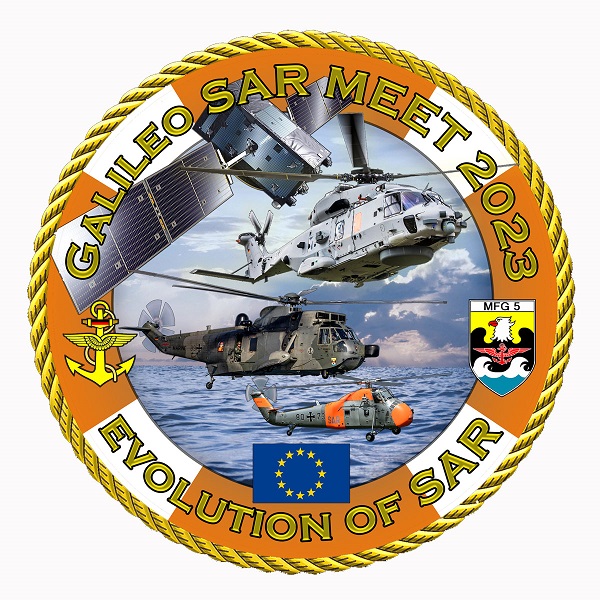
Galileo SAR Meet 2023 – Nordholz
In 2023, the event moved to Marinefliegerhorst Nordholz in Germany. Nordholz already had a connection to the SAR Meet and represented a continuation of the event’s long-standing German SAR tradition.
The international character of the event continued to grow. Speakers from abroad were introduced, further expanding the programme beyond the participating crews and creating additional opportunities to share experience and perspectives from different countries and organisations.
Galileo SAR Meet 2025 – Prague-Kbely
The 2025 Galileo SAR Meet was hosted at Air Force Base Kbely in Prague, Czech Republic. By this stage, the event had developed into a broader international platform connecting operational SAR personnel, experts, organisations and representatives from different parts of the world.
The 2025 programme introduced the Ground Crew Challenge, recognising the important role of personnel on the ground and highlighting that successful SAR operations depend on the interaction of many different people and capabilities.
The continued development of the symposium and international speakers also reinforced the role of the Galileo SAR Meet as a platform for professional exchange beyond the operational challenges.
The road to 2027
In 2027, the Galileo SAR Meet returns to Germany, with Army Airfield Niederstetten in Baden-Württemberg serving as the host location.
More than three decades after the origins of the SAR Meet, the event has developed far beyond its beginnings as a friendly competition between neighbouring SAR crews. Today, the Galileo SAR Meet provides an international platform for flying crews, ground personnel, SAR specialists, organisations, experts and invited speakers from Europe and beyond.
Participation is no longer limited to those directly involved in the flying challenges. The event also brings together people who contribute through their operational experience, specialist knowledge, presentations and professional exchange. This broader participation reflects the increasingly international and multidisciplinary nature of modern Search and Rescue.
The operational environment has changed significantly since the first SAR Meets. Aircraft, sensors, satellite services, digital communication and mission systems continue to evolve. At the same time, the fundamental requirements of SAR remain unchanged: sound procedures, well-trained personnel, effective communication and the ability to work together under demanding conditions.
Technology can provide new capabilities. It is the people who turn those capabilities into effective Search and Rescue operations.
Continuing the tradition
Every SAR Meet becomes part of a history shaped by the people who take part in it, the places that host it and the experience they share.
In 2027, that tradition continues at Army Airfield Niederstetten. The next chapter will be written by those who come together there — to train, to exchange experience and to prepare for the challenges of the next mission.